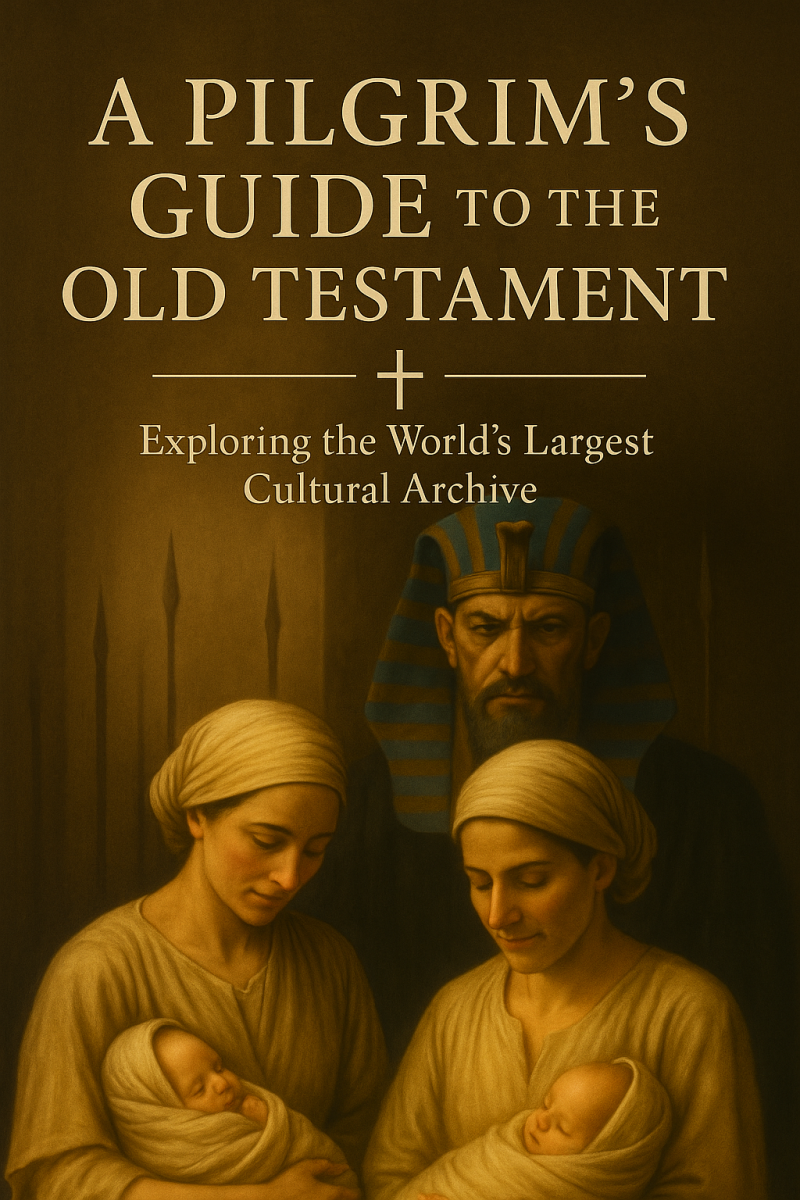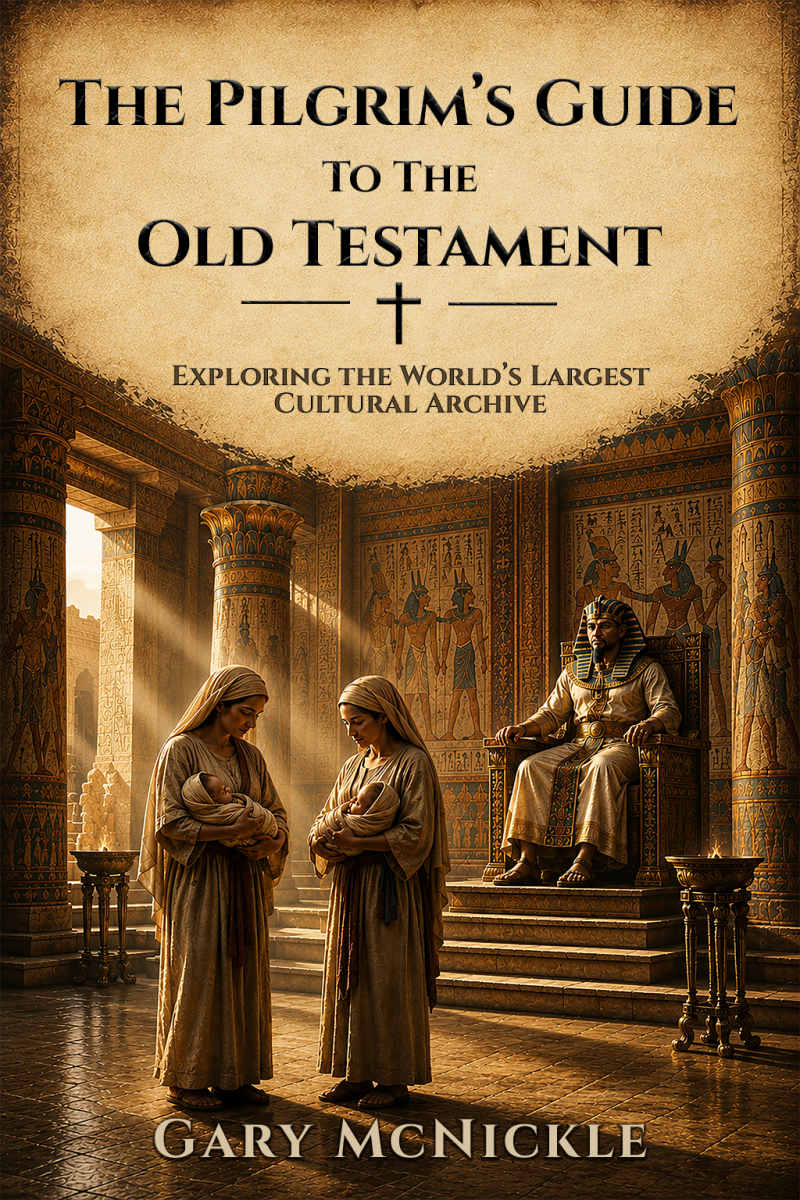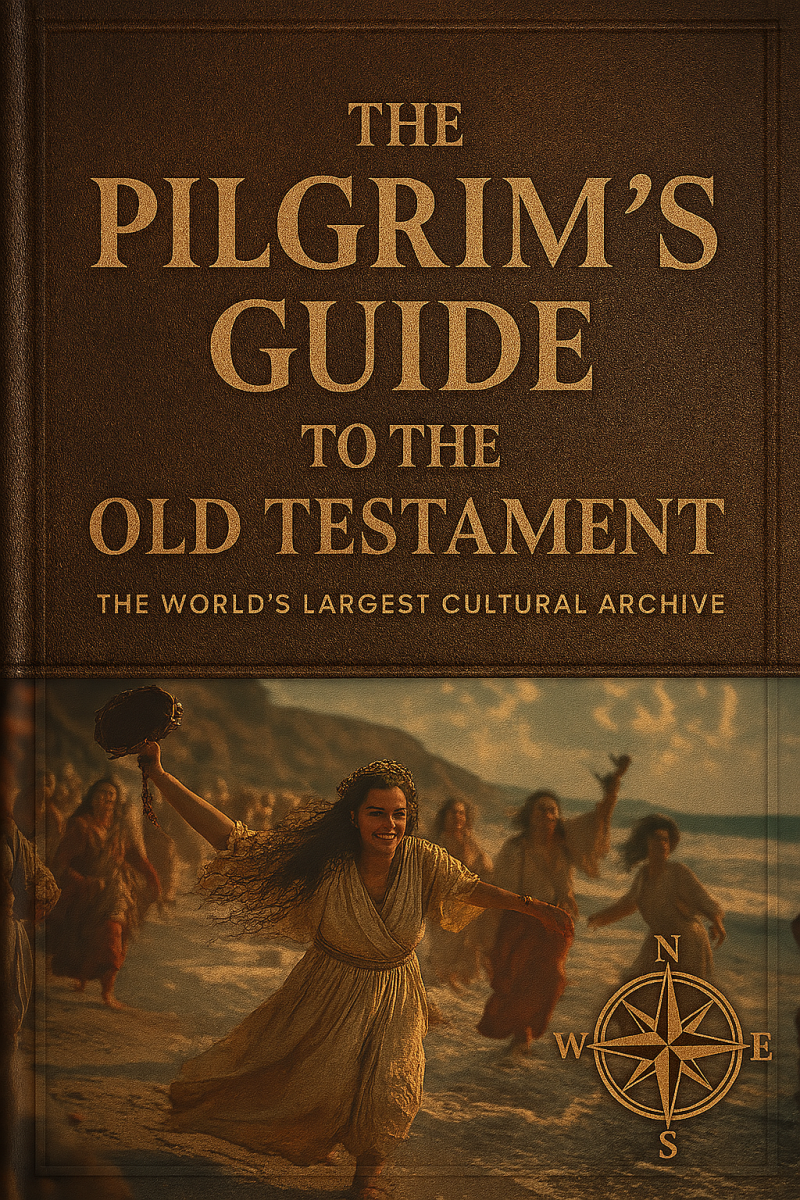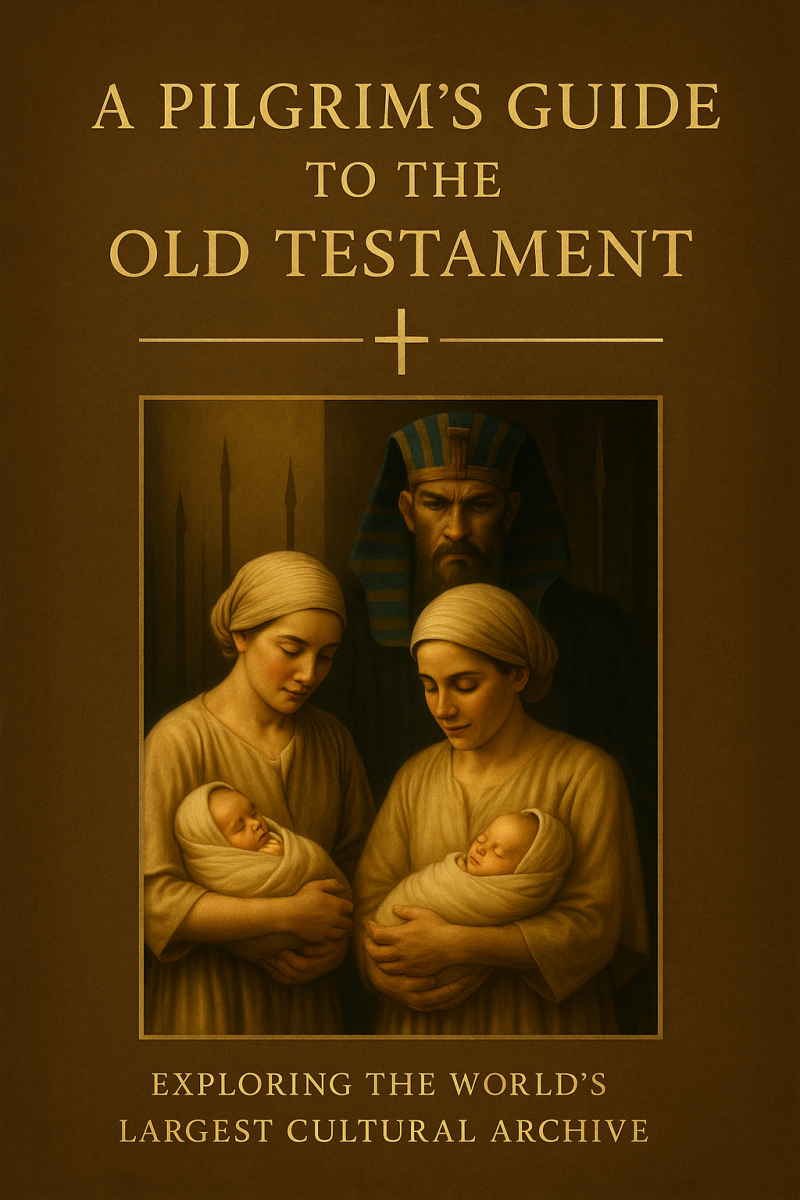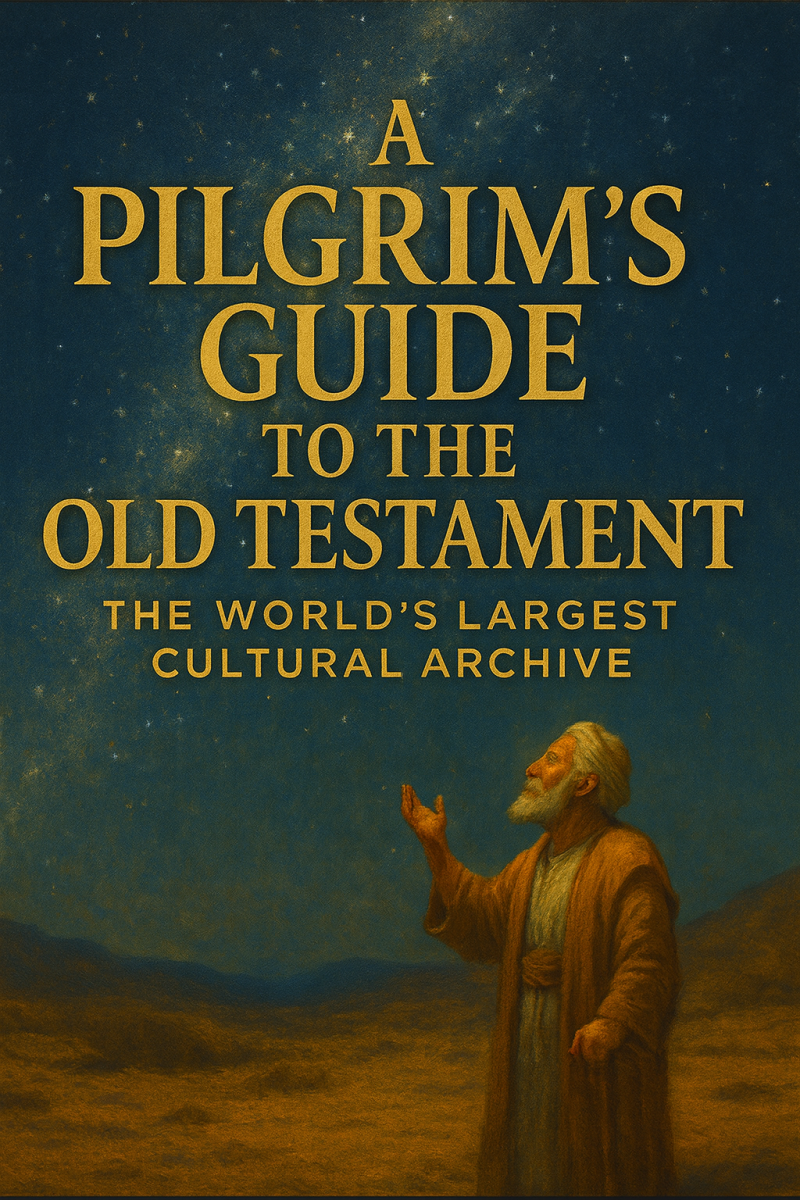
The cover of The Pilgrim’s Guide to the Old Testament underwent dozens of revisions before reaching its final form. This gallery collects many of those iterations, from early concepts and abandoned directions to near-final designs.
Along the way, nearly every element changed: imagery, composition, typography, color palette, symbolism, and even the title treatment itself. Some versions leaned heavily into the idea of pilgrimage, others into biblical history, while still others explored different ways of visually representing the Old Testament’s themes of covenant, exile, kingdom, and return.
Beyond documenting the development of a single book cover, these images offer a glimpse into a creative process that blended research, writing, visual design, historical imagination, and AI-assisted image generation. They illustrate not only how the cover evolved, but how the broader vision of the book evolved alongside it.
The final cover was not discovered all at once. It emerged gradually through experimentation, revision, and the accumulation of many small decisions.
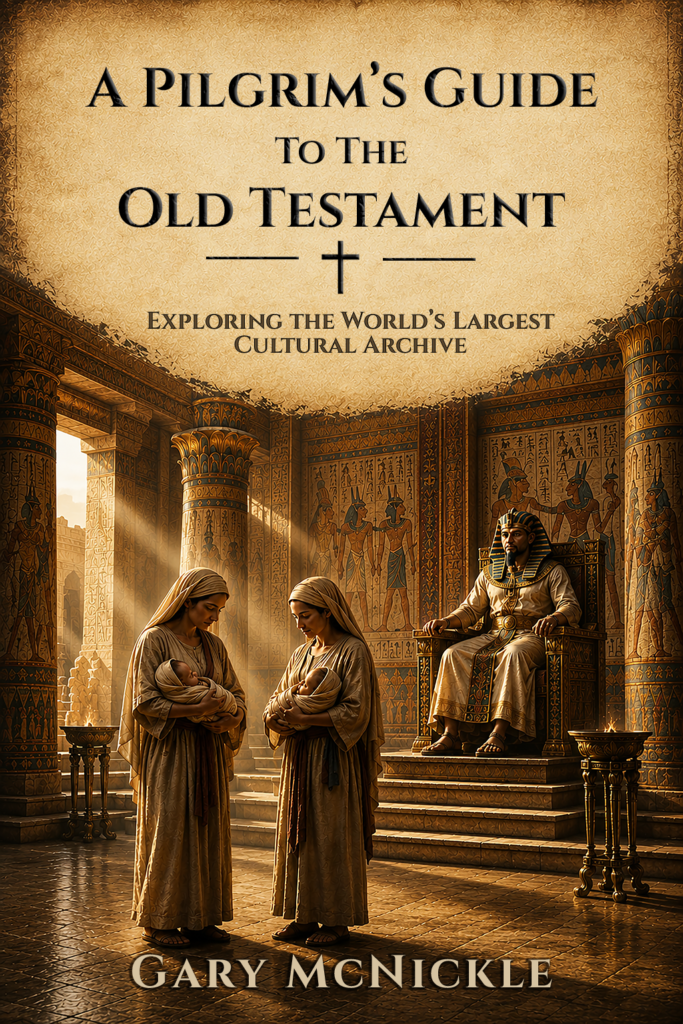
Cover Iterations
The cover of The Pilgrim’s Guide to the Old Testament changed repeatedly over the course of development. This gallery contains a selection of early concepts, alternate directions, near-final designs, and discarded ideas.
Some versions emphasized pilgrimage, others biblical history, and still others focused on the atmosphere and tone of the Old Testament itself. Along the way, imagery, typography, color palette, and composition were revised many times as the vision for the book became clearer.
Looking back through these images, I am struck by how closely the evolution of the cover mirrored the evolution of the manuscript. Neither emerged fully formed. Both were discovered gradually through exploration, experimentation, and revision.