Rebuilding the Ruins
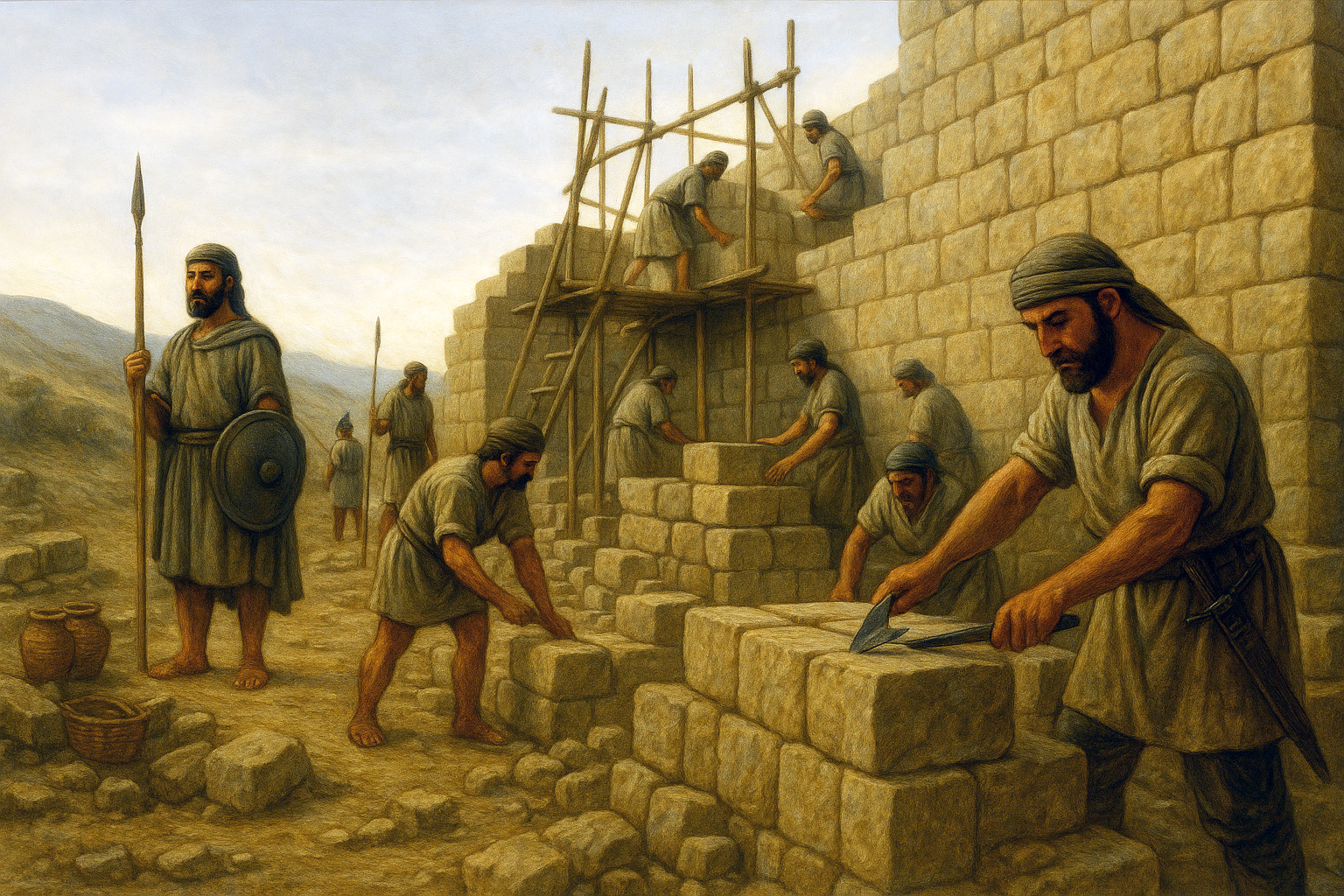
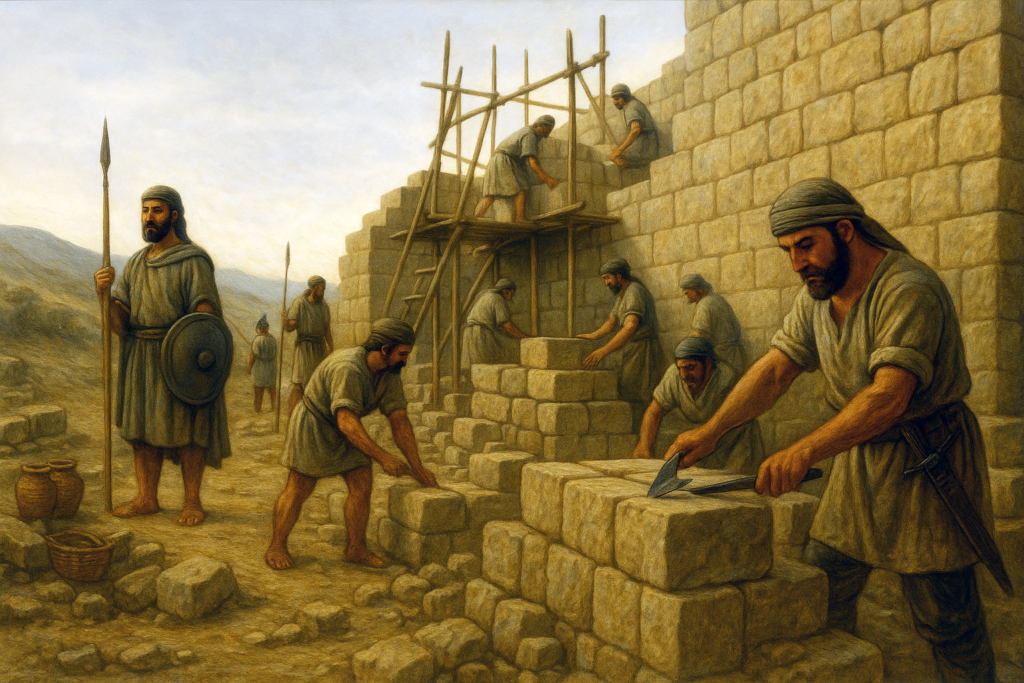
This illustration accompanies the Return section, which follows Israel’s restoration from exile and the long work of rebuilding life in the land. While the return from Babylon is often remembered through the leadership of figures such as Zerubbabel, Ezra, and Nehemiah, most of the work fell to ordinary men and women who labored to restore what had been lost.
Considerable attention was given to portraying reconstruction as a practical and communal effort. The workers are shown cutting stone, setting blocks, raising walls, and standing watch—a reflection of the biblical accounts in which rebuilding and vigilance often went hand in hand.
Historical details, tools, clothing, construction methods, and defensive concerns were revised repeatedly during development. The goal was not merely to depict a construction site, but to evoke the patient, hopeful labor of a people returning home after generations in exile.
More than a story of architecture, the Return is a story of restoration. Stone by stone, wall by wall, a community begins to reclaim its identity, its worship, and its future.
Return Iterations
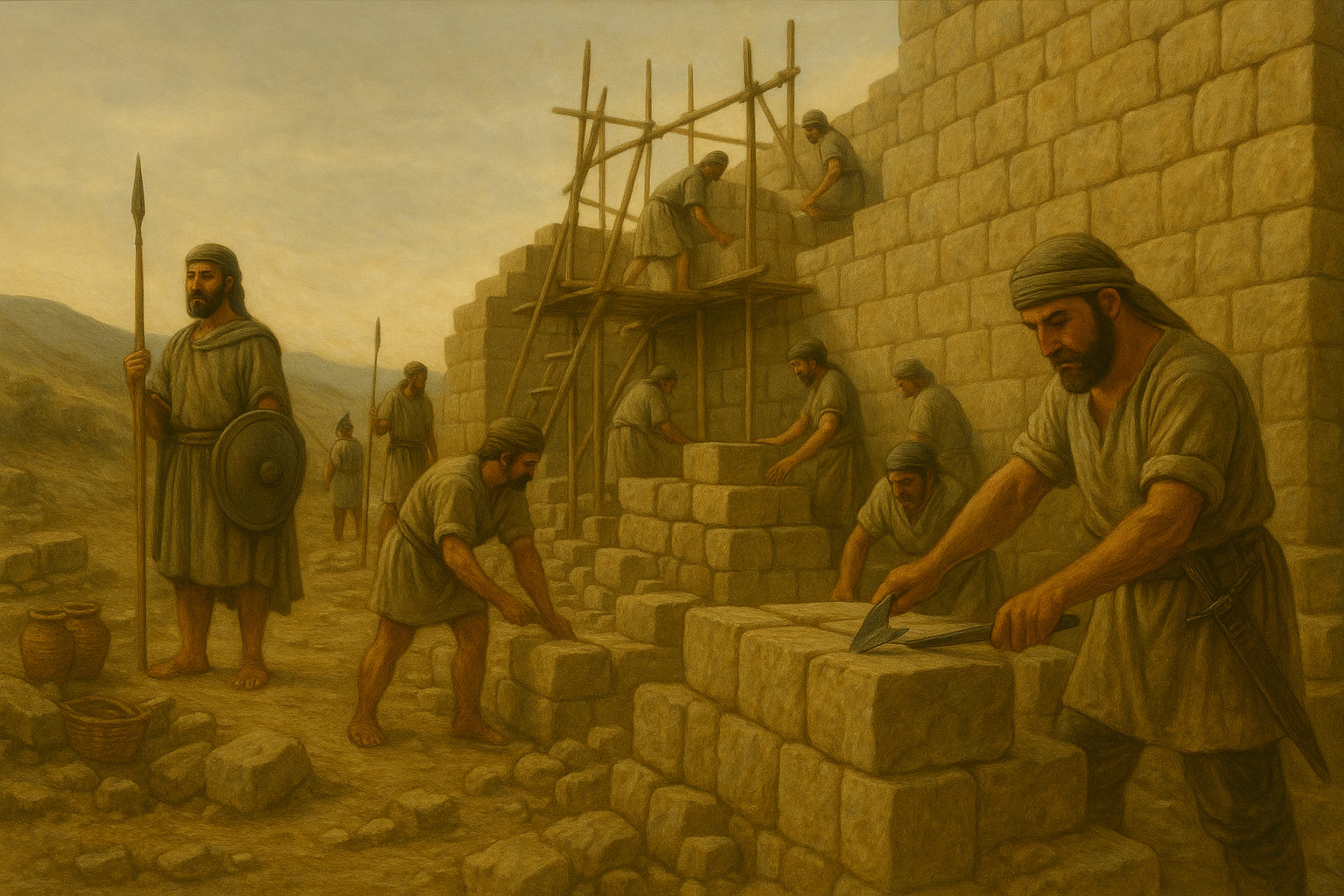
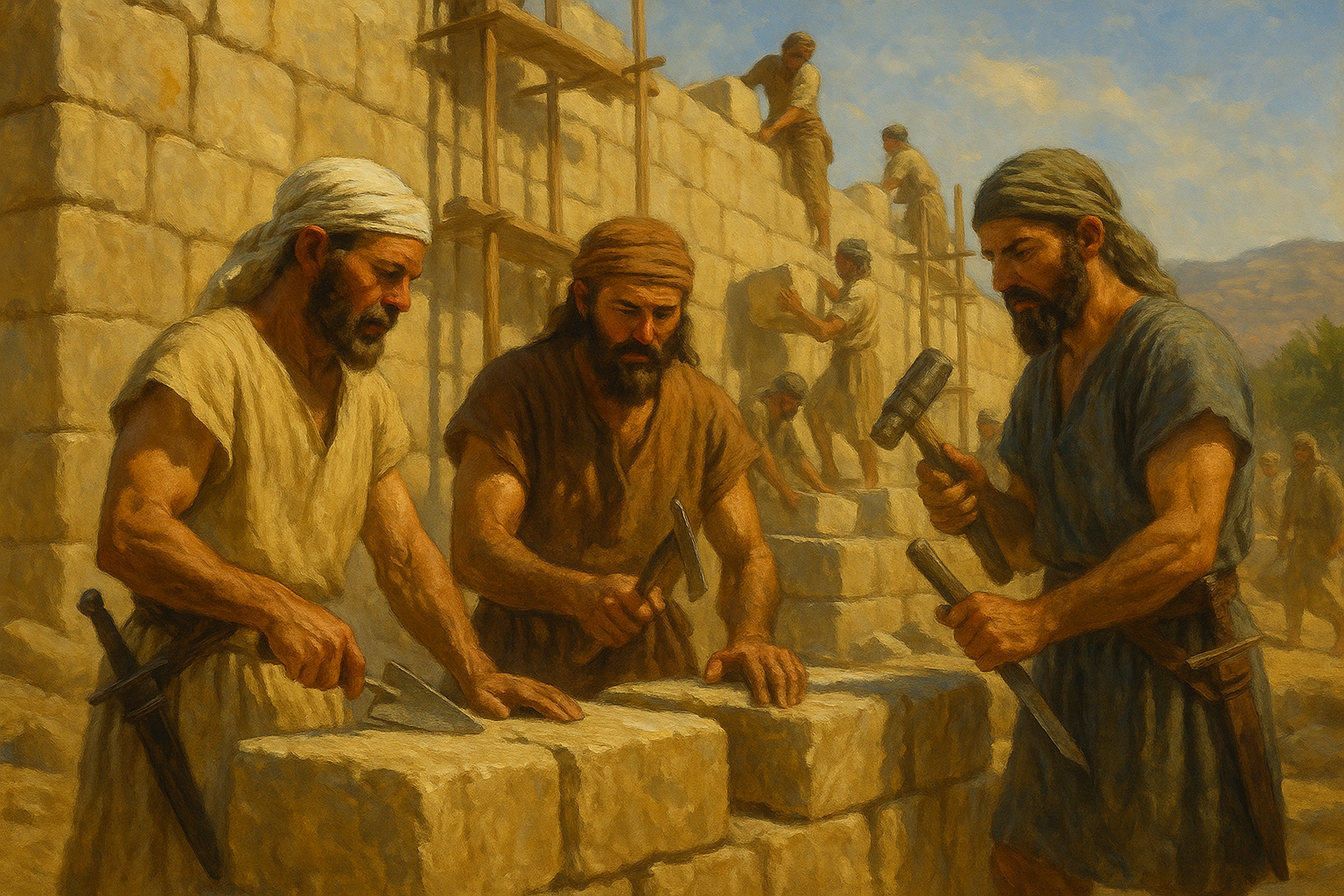
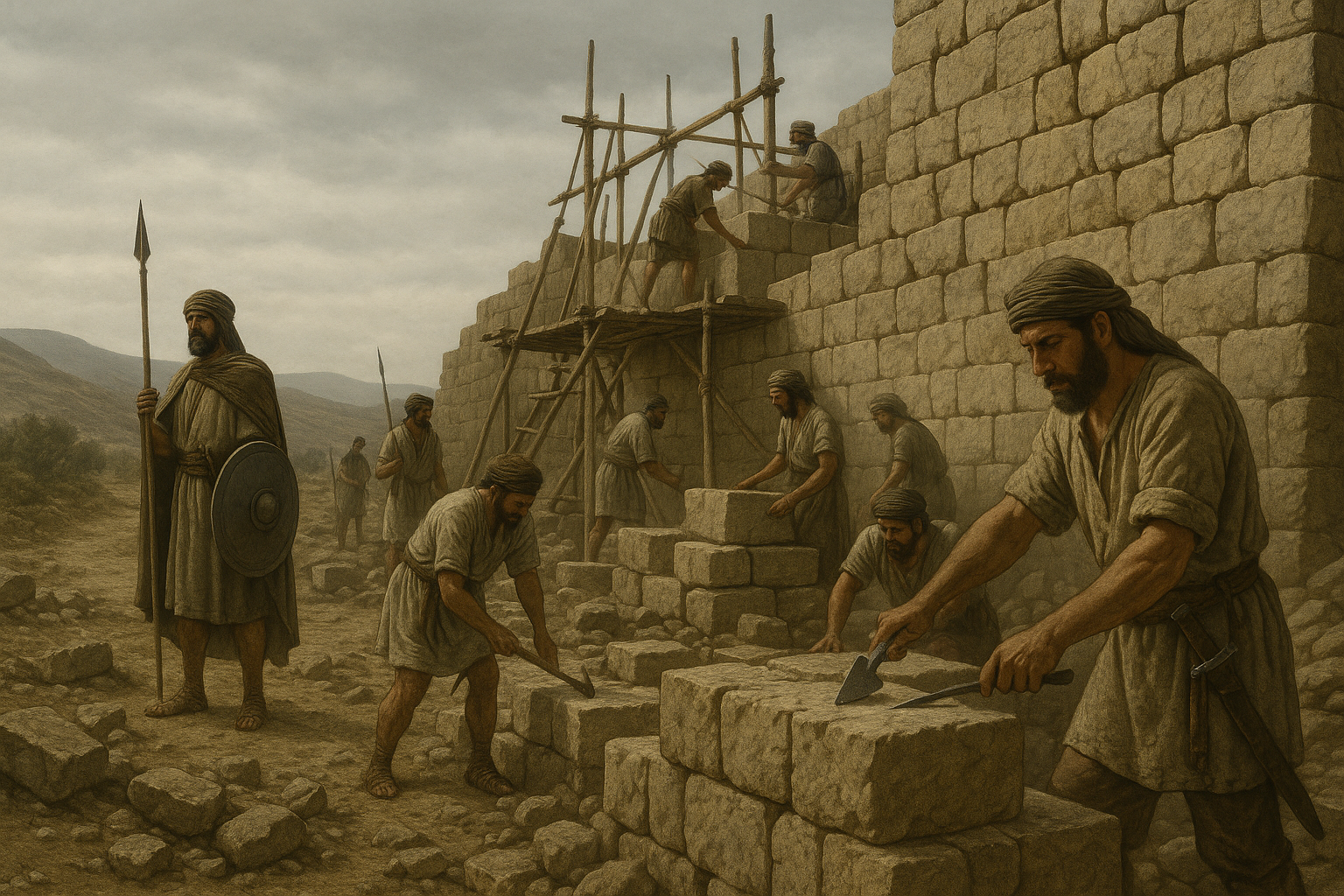
This gallery contains both early concepts and later refinements for the Return illustration. As development progressed, considerable attention was given to questions of historical accuracy, construction methods, clothing, tools, defensive preparations, and the overall mood of the scene.
Various compositions were explored, including different numbers of workers, building techniques, and levels of visible security. The goal was to portray not simply the completion of a wall, but the daily work of rebuilding a community after exile.
Together, these images document the process of refining the visual language of restoration, perseverance, and hope that ultimately shaped the final illustration.